

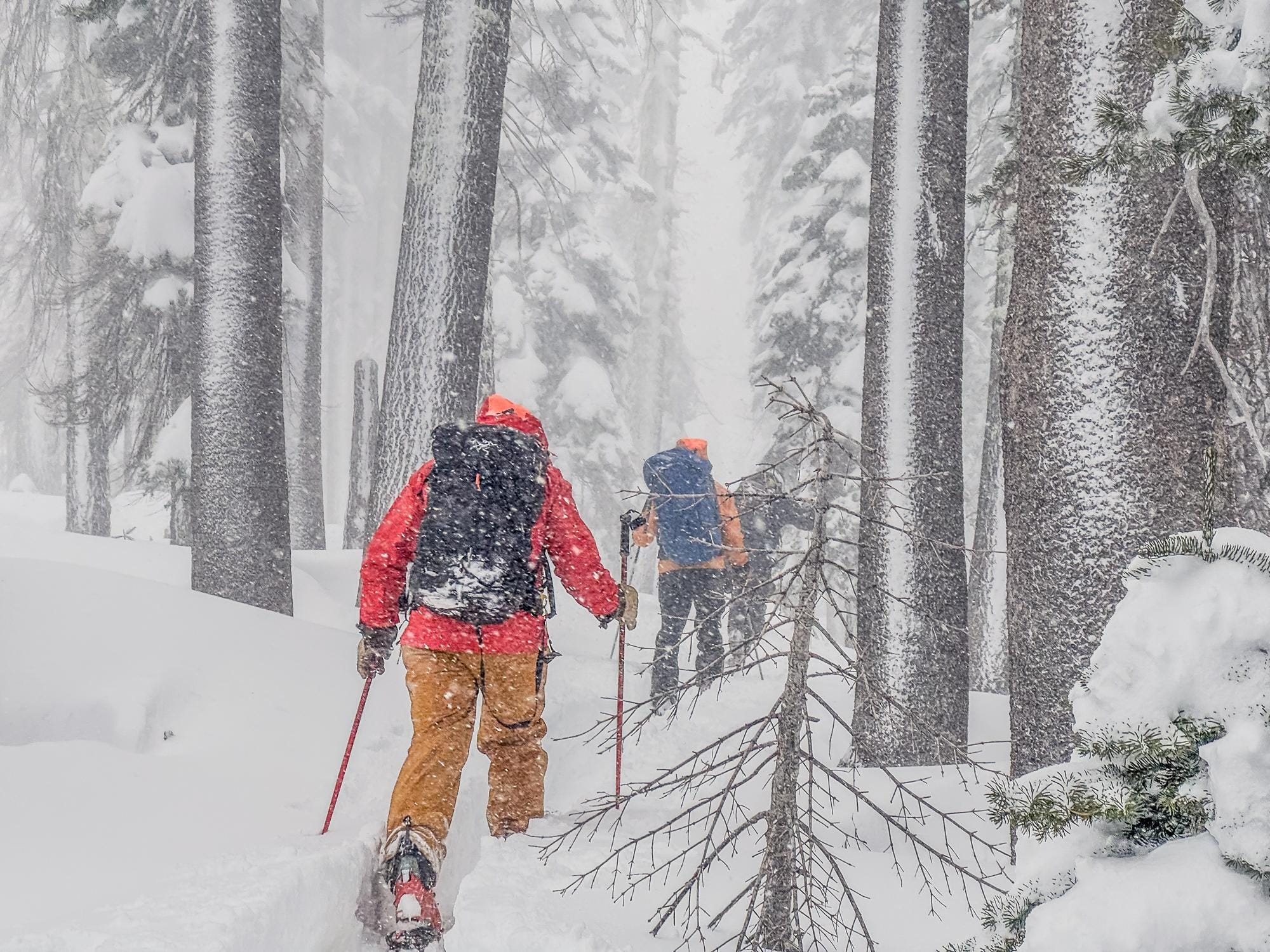
On March 5, 2024, in the wake of a large winter storm, Tahoe Nordic Search and Rescue (TNSAR) carried out three rescues in a single day and night.
It started with a call about a missing skier behind Crow’s Nest at Sugar Bowl. The skier had reached out to patrol before losing cell service. Patrol found tracks heading out of bounds, and two TNSAR skiers descended into the steep, technical terrain to find what turned out to be two lost skiers.
As they made their way back toward the ridge, they spotted another set of tracks heading farther into the backcountry. They alerted the snowcat and snowmobile teams below who were involved in the initial rescue. Soon afterward, the snowmobilers found a separate lost snowboarder sheltering in an outhouse at Onion Creek Campground. He hadn’t been the subject of the original search, but the team brought him to safety too.
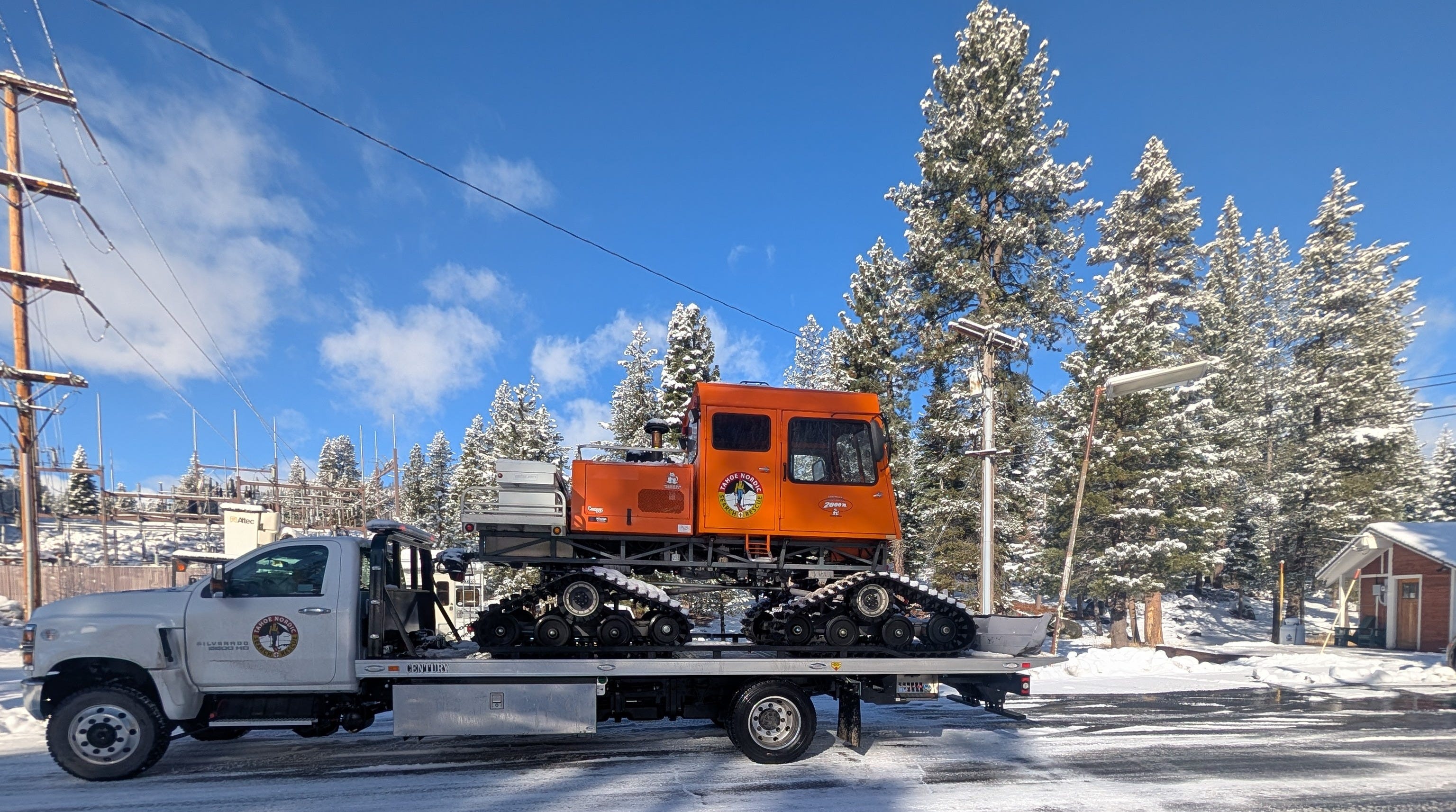
As those searches were wrapping up, Nevada County Sheriff’s Office called for help with a snowmobiler stuck near Castle Peak. The TNSAR snowmobilers loaded their sleds, stopped for gas and headed to the Donner Lake interchange, where Nevada County SAR gave them the coordinates. With the ski and snowcat teams following to assist, they found the exhausted snowmobiler, dug out his sled and helped him ride out safely.
Three rescues and four people back safely. While a day like that isn’t typical, it gives you a pretty good idea of the range of situations these volunteers are ready for. Everyone who spends time in the backcountry around here is lucky to have them.
These hasty winter rescue operations are what we do best.
For this spotlight, the TNSAR team answered our questions together about the people behind those rescues, what it takes to be ready, and what they wish the rest of us knew before heading out.
How the team began
TNSAR grew out of a tragedy. In 1976, two 12-year-old boys became lost beyond Northstar during a blizzard. At the time, there was no organized backcountry ski team to respond. One boy’s father and a group of volunteer skiers joined the search, but one of the boys died before help reached him.
Afterward, his father and other local skiers helped form Tahoe Nordic Search & Rescue. They wanted a permanent team with the skills, equipment and organization to reach people in time, and reduce the chance of another family going through the same thing.
Fifty years later, phone-based mapping, faster snowcats and snowmobiles, helicopter support and better communications have changed how the team works. The mission remains much the same: get to people quickly and safely, and help the rest of us make better decisions in the mountains.
The people who answer
The people who answer the call, sometimes in the middle of the night or in the harshest conditions, are a great cross section of our community. There are doctors, nurses, EMTs, firefighters, ski patrollers, guides and professional athletes, alongside engineers, contractors, electricians, pilots and tech workers.
There are also volunteers handling dispatch, communications, bookkeeping, education, and equipment maintenance. A successful rescue depends on not just the people out in the field, but everyone behind the scenes keeping the lights on and the non-profit running.
These are people with day jobs and families. Their reason for showing up is pretty straightforward.
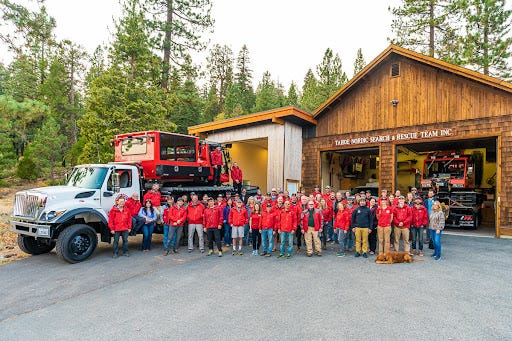
Everyone comes to TNSAR because we want to keep our local family and friends safe in our own backyards.
What it takes to volunteer your time
It takes a lot to become one of those searchers. Prospective volunteers attend general meetings, submit a detailed application, interview, pass a background check through the Placer County Sheriff’s Office, receive an Office of Emergency Services card and are voted onto the roster. That’s all before the training begins.
Moving from the C Team through the B Team to the A Team can take years. Along the way, volunteers build skills in navigation and CalTopo mapping, wilderness medicine, avalanche and rope rescue, helicopter operations, and travel by ski and snowmobile. They also spend time learning the local terrain and maintaining the equipment they rely on.
Just as much goes into learning to work together. When a rescue happens at night in a snowstorm, you need to know what the person beside you can do, and trust them to make good decisions.
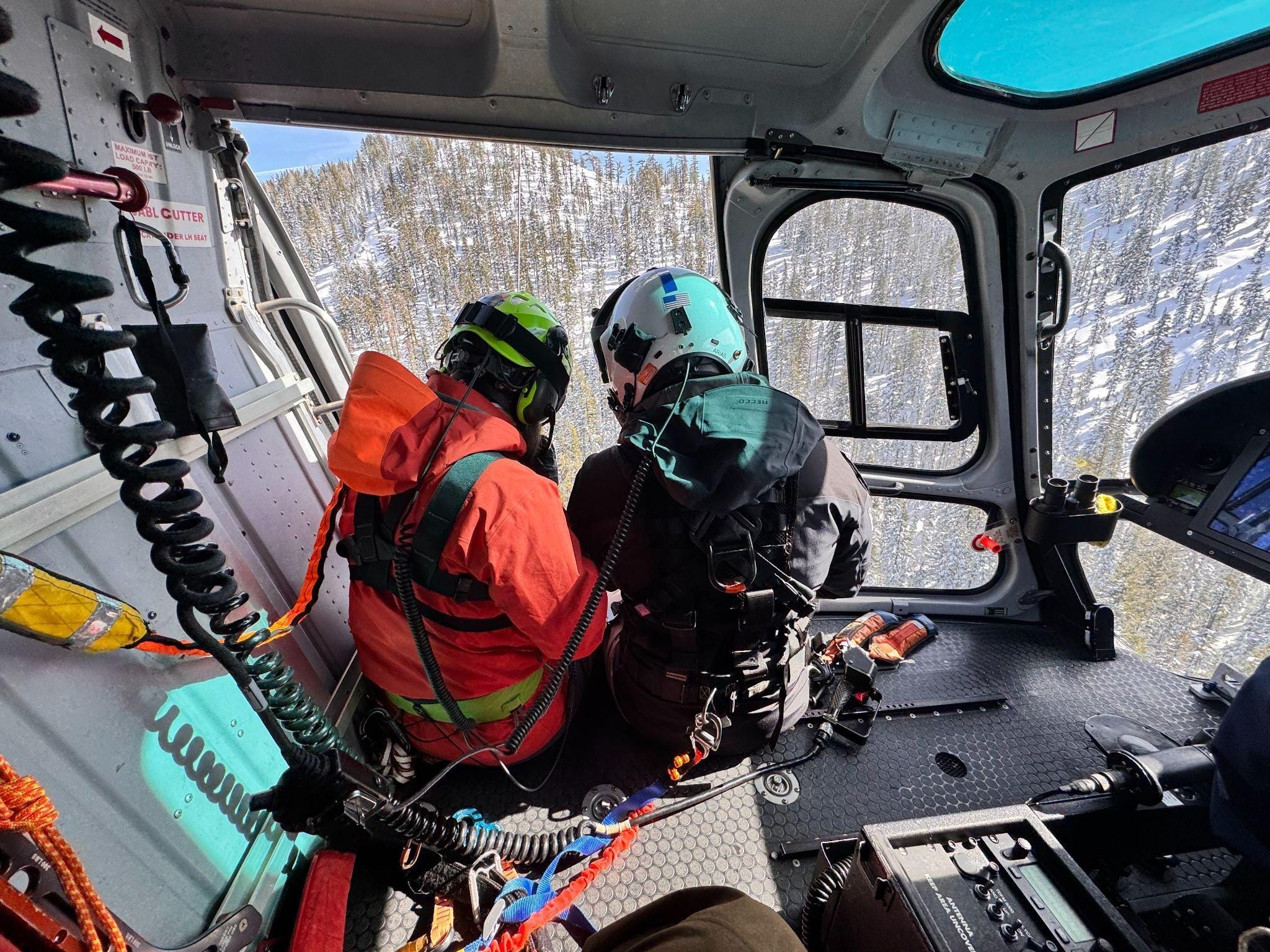
When a call comes through the sheriff’s office, a TNSAR coordinator assesses the situation and risks, selects the people and equipment needed, and sets up a CalTopo map to track searchers. Each response starts with decisions about how to help the missing or injured person while keeping the rescuers safe too.
The season from October 2025 through September 2026 brought fewer incidents than usual, but it was a painful one. The team reported five search-and-rescue incidents and seven search-and-recovery incidents, roughly half its typical total. The latter involve recovering people who have died; these are counts of incidents, each of which may involve more than one person.
TNSAR was among the agencies that responded to February’s Castle Peak tragic avalanche. Six survivors were rescued. The work these volunteers take on includes helping families after the worst has happened, as well as bringing people home alive.
Safety is our number one concern, for the volunteer rescuer and for the missing person.
Lessons the fourth graders learn
The other big part of TNSAR’s mission is education. Helping someone avoid getting lost or injured can spare them, their family and the rescuers a very difficult day.
Through its winter safety programs, the team teaches local fourth graders how to respond if they become lost, including Hug-a-Tree*, signaling for help and building emergency shelter.
But the team says the most useful lessons start before anyone needs rescuing: wear the right clothing, bring food, water and equipment, and think through the plan before leaving.
That education continues into high school. TNSAR offers local students scholarships for a one-day Avalanche Companion Rescue Course, giving them hands-on practice with rescue equipment and avalanche scenarios.
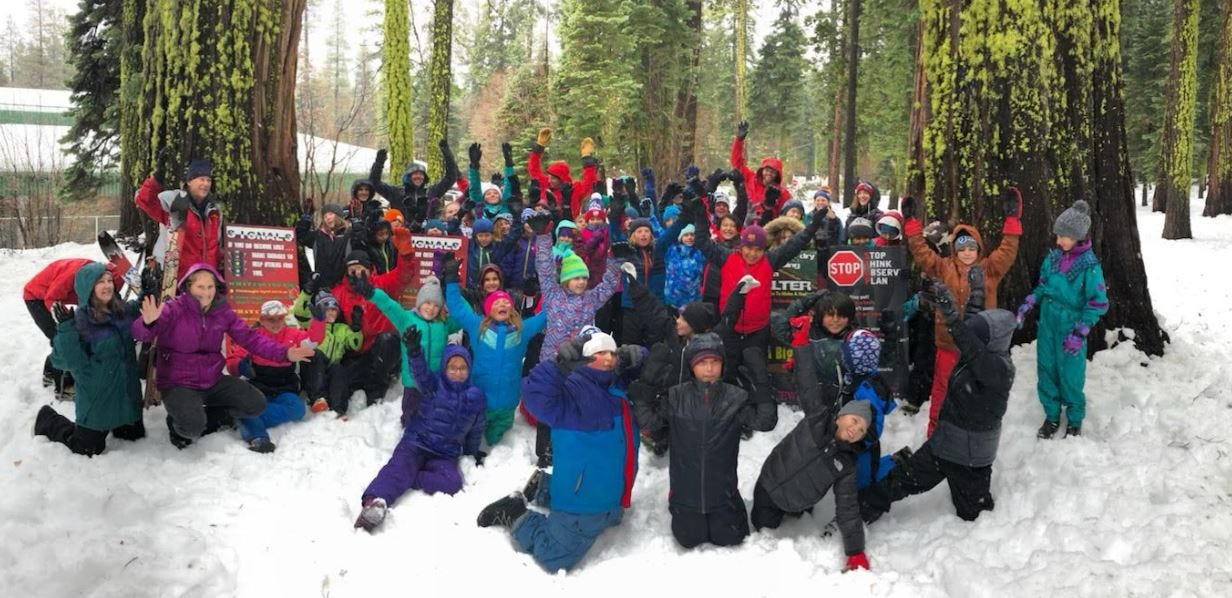
For adults, the advice is just as practical. Tell someone where you’re going, who you’re with and when you expect to return. Check the weather and avalanche forecast. Bring appropriate layers, food, water and emergency supplies, along with a charged phone. Carry the equipment the terrain requires and learn how to use it.
The team also sees what happens when communication breaks down within a group. Talk through the route and plan together, and make sure everyone understands them.
Having the right equipment is only a small part of what it takes to be a well-prepared group.
When to call for help
If you think you’re lost, the team teaches the same first step to adults as it does to fourth graders: STOP. Stop, Think, Observe, Plan. Physically stop moving, think about the last place you knew where you were, observe your surroundings and work out a plan. If you’re still lost or injured and worried about getting back safely, call 911.
Embarrassment and worry about a bill shouldn’t keep you from asking for help. The team has rescued professional athletes and experienced backcountry travelers too. Experience helps, but it doesn’t make anyone immune to getting lost or injured.
Tahoe Nordic Search and Rescue is made up entirely of volunteers, and we will never charge anyone for our services.
The team points out that our stretch of the Sierra isn’t one continuous north-south ridgeline. It’s broken up by ridges and drainages that can funnel skiers and riders away from the resort and deeper into the backcountry, in some areas toward Hell Hole Reservoir. A slope that looks like it might wrap back around to the lifts can instead drop you into a drainage heading in the wrong direction. Continuing downhill can take you farther from the ski area, roads and help.
You yourself are the first line of defense in preventing an incident in the backcountry.
How we can help
The volunteers give their time, but keeping them equipped and ready takes money. Heading into this winter, the team identified jackets and radios for new dog-team members, along with updated digital radios so TNSAR can communicate effectively within the team and with other local SAR organizations.
One way to help is to donate directly to TNSAR. Those contributions support the equipment, training and education behind the work.
You can also support the team by skiing The Great Ski Race, its biggest annual fundraiser. The race began in 1977 and celebrates its 50th anniversary on March 7, 2027, at Tahoe Cross Country Center in Tahoe City. The 26km race starts at 9am and the 10km at 9:25am. Adult registration is $50 for the race’s 50th anniversary. Register here to help fund rescue equipment and winter safety education.
If you’re interested in joining the team, its membership page explains the process. The roster is currently full, but prospective volunteers can attend general meetings and learn about future recruitment.
For those of us who love getting out in these mountains, supporting TNSAR great way to say thanks. The person they come looking for next could be a friend or family member.
Share this with a ski partner before winter gets going. Know another local person or organization we should feature? Send us a suggestion.
Events Calendar · Sponsor TNT · Submit News
* Hug-a-Tree teaches kids to stop when they realize they’re lost, find a nearby tree and stay put. Hugging the tree can help them feel calmer, and staying in one place makes them easier to find. They also learn to keep warm, use a whistle and answer searchers’ calls, with reassurance that they won’t be in trouble for getting lost.
Excellent reporting. We are so lucky they're here for us all.